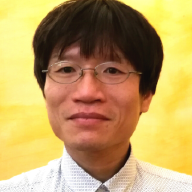
Abhik Bhattacharjee is a research assistant in the BUET Department of Computer Science and Engineering NLP group. They are the first author of BanglaBERT and co-first author of XL-Sum, a multilingual summarization dataset.
Adam Gleave is co-founder and CEO of FAR.AI, a non-profit AI safety research institute. Gleave holds a PhD from UC Berkeley under Stuart Russell and previously worked at Google DeepMind. Gleave co-created Stable-Baselines3 and co-authored work on adversarial policies in deep reinforcement learning.
Aitor Gonzalez-Agirre leads the Language Modelling team in the Language Technologies Unit at the Barcelona Supercomputing Center. They are the first author of the Salamandra Technical Report, which describes open 2B, 7B and 40B parameter models trained on 35 European languages, and earlier co-authored the SemEval semantic textual similarity tasks.
Albert Gu is a co-founder and chief scientist of Cartesia and a professor at Carnegie Mellon University. They are an author of the S4 structured state space papers and, with Tri Dao, the developer of Mamba, a linear-time sequence architecture, and Mamba-2.
ADBespoke Labs Co-founder and Chief Scientist; professor at UC Berkeley
Alex Dimakis is a professor of EECS at UC Berkeley, co-director of the NSF AI Institute for Foundations of Machine Learning, and co-founder of Bespoke Labs. His work covers generative models for inverse problems, coding theory for distributed learning, and open data curation for reasoning models such as OpenThoughts and DataComp-LM.
AALiquid AI Co-founder and Chief Scientific Officer
Alexander Amini is a co-founder and Chief Scientific Officer of Liquid AI, an MIT CSAIL spinout founded in 2023 to build models based on liquid neural networks. Amini holds MIT degrees through the PhD in computer science, remains an MIT research affiliate, and leads MIT's introductory deep learning course 6.S191. Amini also co-founded Themis AI, which works on uncertainty-aware AI.
Alexander Meinke is Head of Research at Apollo Research, which he joined as a research scientist in late 2023. Meinke is a co-author of the Apollo paper on in-context scheming in frontier models and of work on anti-scheming training and the Situational Awareness Dataset.
Alexandre Alahi is an Associate Professor at EPFL and head of the Visual Intelligence for Transportation laboratory (VITA). The group works on socially aware perception and prediction for transportation and smart spaces. Alahi was a postdoctoral researcher and research scientist at Stanford before joining EPFL in 2017.
Alexandre Défossez is an AI researcher in Paris working on generative music and speech models for low-latency use. They co-founded Kyutai, where they lead research projects, and spent three years at FAIR Paris leading MusicGen and co-leading AudioCraft. They also co-founded the voice AI company Gradium.
AGOpenThoughts Professor, UC Berkeley; Bespoke Labs co-founder
Alexandros G. Dimakis is a professor in the EECS department at UC Berkeley and co-director of the National AI Institute for Foundations of Machine Learning. They co-founded Bespoke Labs, a data curation company, and contribute to the OpenThoughts reasoning datasets. Earlier work includes compressed sensing with generative models and gradient coding.
AFMicrosoft Corporate Vice President of AI, Microsoft Superintelligence
Ali Farhadi is a computer scientist and professor at the University of Washington's Allen School. Farhadi was CEO of the Allen Institute for AI from July 2023 until stepping down in March 2026, and then joined Microsoft's superintelligence group as a corporate vice president. Research areas include computer vision, language and vision, and machine learning.
Amanpreet Singh is a co-founder and former CTO of Contextual AI. They previously led research and engineering teams at Hugging Face and Meta AI Research, and are first author of FLAVA, a vision-and-language alignment model, and a co-author of the MMF multimodal framework and GRIT.
Amir Hossein Kargaran is a PhD student at LMU Munich's Center for Information and Language Processing, advised by Hinrich Schütze. They work on multilingual and low-resource NLP and web data, and are lead author of GlotLID and a co-author of Glot500 and FineWeb2.
Amnon Shashua is a professor of computer science at the Hebrew University of Jerusalem and co-founder of Mobileye, OrCam and AI21 Labs. He has led Mobileye as CEO and works on computer vision for driver assistance and autonomous driving.
Anastasios N. Angelopoulos is a co-founder and CEO of LMArena (later branded Arena). As a Berkeley EECS PhD student, Angelopoulos launched Chatbot Arena in 2023 with Wei-Lin Chiang as a side project of the LMSYS group; it became a company in April 2025. Angelopoulos's research background includes statistics and uncertainty quantification.
Andrea Vedaldi is a Professor of Computer Vision and Machine Learning at the University of Oxford and co-lead of the Visual Geometry Group, and an Amazon Scholar in Amazon's Frontier AI and Robotics lab. Vedaldi works on spatial intelligence and 3D reconstruction. Vedaldi co-developed MatConvNet with Karel Lenc.
Andreas Blattmann is a co-founder of Black Forest Labs. Before that, they did generative image and video research at LMU Munich under Björn Ommer and are a co-author of the latent diffusion paper and of Stable Video Diffusion work.
Andrej Karpathy is an AI researcher and educator who completed a PhD at Stanford under Fei-Fei Li. Karpathy was a founding member of OpenAI, led computer vision for Autopilot at Tesla, and later founded the education company Eureka Labs. Karpathy also publishes educational videos and open source code on neural networks and language models.
Andrew Zisserman is a Professor of Computer Vision Engineering at the University of Oxford and a Royal Society Research Professor, affiliated with Google DeepMind. Zisserman works on computer vision and co-wrote the textbook Multiple View Geometry in Computer Vision with Richard Hartley. Honors include Fellowship of the Royal Society and the Royal Society Milner Award.
Andriy Mulyar is a co-founder of Nomic AI, founded in 2022, and an author of the 2023 GPT4All paper on locally runnable open language models. Nomic also released the open nomic-embed-text embedding models and the Atlas data visualization platform.
Anette Frank is professor of computational linguistics at Heidelberg University, where Frank has led the NLP group since 2007. Research covers semantics and discourse, argumentation and commonsense reasoning, with recent work on the faithfulness of LLM explanations. Frank developed the SALSA corpus and SALTO annotation tool for German lexical semantics.
Anindya Iqbal is a professor in the Department of Computer Science and Engineering at BUET, with research in empirical software engineering and security. They are a co-author of BanglaBERT, a Bangla language understanding model from BUET's NLP group.
Anoop Kunchukuttan is a principal applied researcher on the Microsoft Machine Translation team in Hyderabad and a founding member and co-lead of AI4Bharat. His work on natural language processing for Indian languages includes the Samanantar corpus and IndicTrans2.
Antoine Bosselut is a professor at EPFL who heads its Natural Language Processing Laboratory and co-leads the Swiss AI Initiative. Bosselut was principal investigator of MEDITRON, an open medical language model released in 2023, and co-leads the Apertus open multilingual models released by EPFL, ETH Zurich and CSCS in 2025.
Antonio Branco is an associate professor with habilitation at the University of Lisbon, where Branco heads the NLX natural language processing group, and Director General of PORTULAN CLARIN, Portugal's national node of the CLARIN research infrastructure. The NLX group released the Albertina family of open neural encoders for Portuguese.
AEAI Sweden Research scientist and tech lead; lead author of GPT-SW3
Ariel Ekgren is a research scientist and tech lead at AI Sweden who works on large language models for Swedish and the Nordic languages. Ekgren is the corresponding author of the GPT-SW3 papers, which describe a family of decoder-only models trained on about 320 billion tokens.
Arthur Mensch is a French AI researcher and co-founder and chief executive of Mistral AI. Before founding the company in 2023 with Guillaume Lample and Timothée Lacroix, Mensch worked at DeepMind Paris on large language models. Earlier research covered optimization, optimal transport and brain imaging analysis.
Ashish Vaswani is co-founder and CEO of Essential AI and a co-author of the 2017 paper "Attention Is All You Need," which introduced the Transformer. Vaswani previously worked at Google Brain and co-founded Adept AI. Essential AI released its first open model, the 8B-parameter Rnj-1, under an Apache 2.0 license in December 2025.
Barbara Plank is a professor and chair for AI and Computational Linguistics at LMU Munich, where Plank heads the MaiNLP lab and co-directs the Center for Information and Language Processing. Research focuses on human-facing NLP: making models robust to language variation, fairer, and aware of variation in human labels.
Red Hat Senior Machine Learning Engineer (per Hugging Face profile)
bartowski is a Hugging Face account known for publishing GGUF and other quantizations of newly released open models, often shortly after release. The account is active as of November 2026, and its profile lists a senior machine learning engineer role at Red Hat.
Ben Fielding is a co-founder of Gensyn, a decentralized machine learning compute protocol founded in 2020 with Harry Grieve. Fielding holds a PhD in computer science focused on evolutionary optimization of neural architectures. Gensyn has released open-source code for RL Swarm, a peer-to-peer framework for collaborative reinforcement learning.
Benjamin Rosman is a professor at the University of the Witwatersrand, director of the Wits MIND Institute and of its robotics and learning lab, and chief science officer of Lelapa AI. Rosman is a co-founder of Lelapa AI and of the Deep Learning Indaba, and research focuses on reinforcement learning and robotics. TIME named Rosman to its 2025 list of the 100 most influential people in AI.
BOCompVis Professor and head of the Computer Vision and Learning group
Björn Ommer is a full professor at LMU Munich, where he heads the Computer Vision and Learning group (CompVis). Their group developed latent diffusion models, the basis of Stable Diffusion, and Ommer received the German AI Prize 2024 for this work.
Bo Peng is the creator and lead of RWKV, an open-source RNN-style language model architecture that trains like a transformer. They are lead author of the RWKV-7 Goose paper, which introduces a generalized delta rule with vector-valued gating. The RWKV project operates under the Linux Foundation AI and Data.
Brian Ichter is a co-founder of Physical Intelligence, where they have worked since 2024. Previously they were a research scientist at Google Brain and Google DeepMind. Ichter co-developed SayCan and RT-2, and is a co-author of the pi0 vision-language-action model.
BCNVIDIA Vice President, Applied Deep Learning Research; leads the Ne
Bryan Catanzaro is Vice President of Applied Deep Learning Research at NVIDIA, where the team applies deep learning to areas from graphics to chip design, and is associated with the Nemotron open model effort. Catanzaro co-authored the Deep Speech and Deep Speech 2 speech recognition papers during time at Baidu and helped start the cuDNN library.
Carole-Jean Wu is a founding member and Vice President of MLCommons and a director of AI research at Meta, where Wu leads systems and machine learning research. Wu chaired the MLPerf Recommendation Benchmark Advisory Board and works on sustainable AI computing, including the ACT carbon modeling tool. Wu previously was a tenured professor at Arizona State University.
Ce Zhang is co-founder and CTO of Together AI and a Neubauer Associate Professor of Computer Science at the University of Chicago, having moved there in 2024. Earlier, Zhang was a professor at ETH Zurich, and received a PhD at the University of Wisconsin-Madison followed by a postdoc at Stanford. Zhang works on data-centric machine learning systems and decentralized AI training.
Charles Packer is co-founder and chief executive officer of Letta, the company behind the open-source MemGPT agent memory framework. Packer completed a PhD at UC Berkeley's Sky Computing Lab and is first author of MemGPT: Towards LLMs as Operating Systems (2023). Letta emerged from stealth in September 2024 with a $10 million seed round.
Chelsea Finn is an assistant professor at Stanford University, where they lead the IRIS Lab, and a co-founder of Physical Intelligence. Their research focuses on how robots can learn to learn through interaction. Finn is a co-author of Model-Agnostic Meta-Learning (MAML) and received the 2018 ACM Doctoral Dissertation Award.
Christian Rupprecht is an Associate Professor of Computer Science at the University of Oxford and a lead of the Visual Geometry Group. Rupprecht works on computer vision and machine learning, particularly 3D reconstruction, generative models and visual understanding, and holds an ERC Starting Grant for the Volute project on learning from unlabeled data.
Christoph Schuhmann is a co-founder and organizational lead of LAION, the German nonprofit that released the LAION-400M and LAION-5B image-text datasets. As of 2023, press reports described Schuhmann as also teaching physics and computer science at a high school, and Schuhmann helped organize the OpenAssistant project.
Christopher Potts is a Professor of Linguistics at Stanford University with a courtesy appointment in Computer Science, and chairs the Linguistics department. Their research spans formal semantics and pragmatics and NLP topics such as model interpretability and evaluation. Potts is a co-author of the DSPy paper and of work on interpretability tools such as pyvene.
Clifton Poth is a machine learning engineer at Cohere who works on multilingual retrieval and reranking. Poth was first author of the 2023 Adapters library paper and earlier co-developed AdapterHub as a research assistant at the UKP Lab at TU Darmstadt.
Clément Delangue is a co-founder and the chief executive of Hugging Face, the company behind the Hugging Face Hub and the Transformers library. The company was founded in 2016 and began as a chatbot app before becoming a machine learning platform. Delangue is a co-author of the Transformers and Datasets library papers.
Connor Leahy is a German-American AI researcher and entrepreneur who co-founded EleutherAI in 2020 and the AI safety company Conjecture in 2022. Leahy led Conjecture as CEO until 2026 and is now US Director of ControlAI, a nonprofit focused on extinction risk from superintelligent AI.
Daisuke Okanohara is a co-founder of Preferred Networks and its chief operating officer; the company grew out of Preferred Infrastructure, founded in 2006. Preferred Networks developed the Chainer deep learning framework and the MN-Core accelerator. Okanohara is an author of the PLaMo-100B report on a Japanese-focused language model.
Dan Hendrycks is executive director of the Center for AI Safety and holds a PhD in computer science from UC Berkeley. They are lead author of the GELU activation function and of the MMLU benchmark, and also advise xAI and Scale AI.
Dan Jurafsky is a Professor of Linguistics and Computer Science at Stanford University, where they have taught since 2003. Their research covers computational linguistics and natural language processing. Jurafsky co-wrote the textbook Speech and Language Processing with James H. Martin and received a MacArthur Fellowship in 2002.
Dani Yogatama is cofounder and CEO of Reka and an associate professor of computer science at the University of Southern California. Previously they were a senior staff research scientist at DeepMind from 2016 to 2022. Yogatama is an author of the Reka Core, Flash and Edge multimodal model report.
Daniel Han is a co-founder of Unsloth, which builds tools for fine-tuning, compressing, and running open models locally. They previously worked at NVIDIA on GPU-accelerated machine learning in the RAPIDS ecosystem. They have reported and fixed bugs in several open models and maintain the HyperLearn library.
DCPrinceton NLP Group Associate professor, co-leader of the Princeton NLP Group
Danqi Chen is an associate professor of computer science at Princeton University, co-leader of the Princeton NLP Group and associate director of Princeton Language and Intelligence. Their research covers natural language processing, question answering and large language models. Chen received the 2022 Samsung AI Researcher of the Year award and an NSF CAREER Award.
David Ha, known online as hardmaru, is a co-founder and CEO of Sakana AI, a Tokyo-based research company founded in 2023. Ha previously worked at Google and Stability AI. Research interests include world models, evolutionary computation and generative models, and Sakana AI has published work such as The AI Scientist.
David Samuel is a researcher in the Language Technology Group at the University of Oslo, working on language models for Norwegian and other languages. Samuel is first author of NorBench, a benchmark for Norwegian language models, and co-first author of GPT-BERT, a hybrid training approach that combines masked and causal language modeling. Samuel contributes to the NorBERT model family released by the group.
DKStanford University Adjunct professor, Symbolic Systems
Douwe Kiela is a co-founder and former CEO of Contextual AI and an adjunct professor of symbolic systems at Stanford. They previously headed research at Hugging Face and worked at Facebook AI Research, and are a co-author of the retrieval-augmented generation paper.
Edoardo Barba is a researcher in the Sapienza NLP group at Sapienza University of Rome. They are one of the leads of Minerva, a family of Italian-English language models trained on over 500 billion words, together with Roberto Navigli and Simone Conia. Barba is also a co-author of ReLiK for entity linking and relation extraction.
Emad Mostaque co-founded Stability AI in 2020 and served as its CEO until resigning in March 2024. The company supported the release of Stable Diffusion in 2022. Mostaque is the founder of Intelligent Internet and an author on the Stable LM 2 1.6B technical report.
Eneko Agirre is a full professor at the University of the Basque Country and director of HiTZ, the Basque Center for Language Technology. Agirre is an ACL Fellow known for work on word sense disambiguation and semantic textual similarity. HiTZ released Latxa, an open large language model for Basque.
EHQuixi AI (formerly Cognitive Computations) Founder
Eric Hartford is an applied AI researcher who founded Cognitive Computations, now called Quixi AI. They create and release open finetuned models such as Dolphin and Samantha, along with related datasets, and write about their work on a personal blog.
Eric Xing is president of Mohamed bin Zayed University of Artificial Intelligence (MBZUAI), a role effective since January 2021, and a professor of computer science at Carnegie Mellon University, where Xing founded the SAILING Lab. Xing's research covers machine learning systems, probabilistic models and distributed training, and Xing co-founded the machine learning company Petuum in 2016.
Erik Velldal is a professor in the Language Technology Group at the University of Oslo, a post held since 2021. Velldal's research covers sentiment analysis, negation resolution and the development of language resources, and Velldal co-authored NorBench, a benchmark for Norwegian language models.
Etash Guha is a researcher affiliated with Stanford University and a lead of the OpenThoughts project. They are first author of the OpenThoughts paper (ICLR 2026), which presents open data recipes for training reasoning models and the OpenThoughts3-7B model. Guha is also an author on DataComp-LM and Terminal-Bench.
Federico Landini is a speech researcher who completed a PhD at Brno University of Technology's Faculty of Information Technology in 2024, on speaker diarization. They are the first author of VBx, a Bayesian HMM clustering method for x-vectors, and a co-author of MS-VBx.
Filip Ginter is a Professor of Language Technology at the University of Turku and a leader of the TurkuNLP research group. TurkuNLP works on natural language processing for Finnish and multilingual language models. Ginter's earlier research addressed biomedical information extraction.
Firoj Alam is a senior scientist at the Qatar Computing Research Institute (HBKU), with a PhD in computer science from the University of Trento. Their research covers multilingual and low-resource language models, social media analysis and benchmarking. Alam is an author of the Fanar Arabic-centric generative AI platform report and of the LLMeBench framework.
Florian Eyben is a co-founder of audEERING and its chief technology officer, and the lead developer of the openSMILE toolkit for audio feature extraction. The toolkit began at TU Munich and its development continued at audEERING from 2013.
Francois Chollet is an AI researcher who created the Keras deep learning library and the ARC-AGI benchmark. After more than nine years at Google, Chollet left in 2024 to co-found a program-synthesis AGI startup with Mike Knoop and is a co-founder of the ARC Prize Foundation.
Frank Hutter is a professor of machine learning at the University of Freiburg, a PI at the ELLIS Institute Tubingen and a co-founder of Prior Labs. Hutter helped establish AutoML as a research field, led Auto-WEKA and Auto-sklearn, and has focused on tabular foundation models such as TabPFN.
Gabriele Corso is co-founder and CEO of Boltz, a public benefit corporation developing open biomolecular modeling models. They completed a PhD in computer science at MIT CSAIL in 2025 and are an author of DiffDock, a diffusion-based molecular docking method, and of the Boltz-1 and Boltz-2 models.
Gaël Varoquaux is a researcher at Inria working on AI, statistics and health, and chief science officer of probabl. They co-founded scikit-learn and also work on skrub and table foundation models such as CARTE and TabICL. Varoquaux received France's national order of merit in 2025.
GGHugging Face Creator and maintainer of llama.cpp and ggml
Georgi Gerganov is a software developer who builds open source tools for running machine learning models efficiently in C and C++. Gerganov created llama.cpp, whisper.cpp and the ggml tensor library, which are widely used for local inference. In 2026 the ggml team announced it was joining Hugging Face while keeping control of the projects' technical direction.
German Rigau is deputy director of HiTZ, the Basque Center for Language Technology in San Sebastian, and a lecturer at the University of the Basque Country (UPV/EHU), where Rigau belongs to the IXA research group. Rigau previously worked in the TALP language and speech research center at the Technical University of Catalonia. Rigau's research is in natural language processing, including lexical semantics and multilingual language models.
Glenn Jocher is the founder and CEO of Ultralytics, the company behind the open-source YOLOv5, YOLOv8 and YOLO11 computer vision models. Jocher is the main author of the Ultralytics repositories on GitHub and presented YOLO11 at the company's YOLO Vision 2024 event.
Graham Neubig is an associate professor at the Language Technologies Institute at Carnegie Mellon University and co-founder and Chief Scientist of All Hands AI, the company behind the open-source OpenHands coding agent. The project began as OpenDevin in 2024 and was renamed OpenHands. Research focuses on NLP and large language models.
Gregor Žunič is a co-founder of Browser Use, an open source library for web-browsing AI agents. They studied physics and data science at ETH Zurich, and the company was part of Y Combinator's Winter 2025 batch.
Guillaume Lample is a French AI researcher and co-founder and Chief Science Officer of Mistral AI. Before Mistral, Lample was a research scientist at Facebook AI Research (Meta) in Paris, working on natural language processing and machine translation. Lample is a co-author of the original LLaMA and Mistral 7B papers.
Hakim Hacid is Chief Researcher of the Artificial Intelligence and Digital Science Research Center at the Technology Innovation Institute (TII) in Abu Dhabi, the group behind the Falcon language models. Hacid was appointed to the role in September 2024 after serving as acting chief researcher. Earlier, Hacid was an associate professor at Zayed University and held research roles at Bell Labs.
Hannaneh Hajishirzi is a professor at the University of Washington's Allen School and a senior director at Ai2. Hajishirzi works on natural language processing and co-leads Ai2's OLMo open language model effort and the Tulu post-training project, and co-authored the Self-Instruct paper.
HDBigCode Co-lead of BigCode; lead of the LLM Lab at ServiceNow Resear
Harm de Vries leads the Large Language Model Lab at ServiceNow Research and co-leads the BigCode project with Hugging Face. BigCode's StarCoder, a 15 billion parameter open code model released in 2023, was a joint ServiceNow Research and Hugging Face effort, and de Vries is a corresponding author on its paper.
Henrik Klagges is a co-founder of TNG Technology Consulting, founded in 2001, and chairs its supervisory board. Klagges is first author, with Robert Dahlke, of "Assembly of Experts", which describes building the DeepSeek R1T Chimera, a hybrid of two DeepSeek mixture-of-experts models. TNG later released the three-parent R1T2 Chimera under an MIT license.
HBpyannoteAI Creator of pyannote.audio and chief science officer
Hervé Bredin is co-founder and chief science officer of pyannoteAI and a tenured CNRS research scientist at IRIT in Toulouse, currently on leave. They are the lead developer of pyannote.audio, a widely used open-source toolkit for speaker diarization. Bredin also leads pyannote.video and pyannote.metrics.
Hiroya Takamura is a research team leader at the Artificial Intelligence Research Center (AIRC) of AIST in Japan, working on natural language processing and machine learning. Takamura serves as project manager of the Swallow open Japanese LLM project. Their publications include work on numeral-aware language understanding and on unusual word usage detection.
Hjalmar Wijk is a member of METR, listed on the organization's evaluations site as Chief Scientist; a later source lists the role as technical staff. Wijk is an author of METR's 2025 paper on measuring AI ability to complete long tasks and of the HCAST benchmark.
Husein Zolkepli is co-founder and CTO of Mesolitica, a Malaysian company building language and speech models for Malaysian languages. Zolkepli is first author of the 2024 MaLLaM paper describing Malaysia-focused language models of 1.1B to 5B parameters, and publishes many open models and datasets on Hugging Face.
Hüseyin Atakan Varol is the founding director of the Institute of Smart Systems and Artificial Intelligence (ISSAI) at Nazarbayev University in Kazakhstan. Varol's background is in robotics and human-machine interfaces, and Varol has led ISSAI's work on Kazakh-language AI, including the KazLLM models delivered in December 2024.
Igor Susmelj is co-founder and chief technology officer of Lightly, a Swiss company founded in 2019 out of ETH Zurich research that builds data-curation and self-supervised training tools for computer vision, including the open-source LightlyTrain. Susmelj holds BSc and MSc degrees in electrical engineering from ETH Zurich and previously worked as a software engineer at the Swiss stock exchange.
Imanol Schlag is an AI research scientist at the ETH AI Center and co-lead of Apertus, the open large language model of the Swiss AI Initiative. Their research covers efficient architectures, scaling and generalization. Schlag co-invented DeltaNet in the paper "Linear Transformers are Secretly Fast Weight Programmers".
Ines Montani is co-founder and CEO of Explosion, the Berlin company behind the open-source spaCy NLP library and the Prodigy annotation tool. Montani is a Fellow of the Python Software Foundation and has given keynotes at conferences including PyCon India and EuroPython.
Ion Stoica is a professor of computer science at UC Berkeley and a co-founder of Conviva, Databricks and Anyscale, where he is executive chairman of Databricks. His work spans distributed systems and cloud computing, including Apache Spark, Ray and the Chord lookup protocol, and he is a co-author of the MT-Bench and Chatbot Arena evaluation paper.
IGUKP Lab Founder and head, Professor at TU Darmstadt
Iryna Gurevych is a Professor of Computer Science at TU Darmstadt and director of the Ubiquitous Knowledge Processing (UKP) Lab, and was president of the Association for Computational Linguistics in 2023. Their research covers NLP and machine learning, including large language models and AI safety. Gurevych co-developed Sentence-BERT with Nils Reimers and the AdapterHub framework.
Jacob Solawetz is a co-founder of Arcee AI and serves as its chief technology officer. Before Arcee, Solawetz was head of machine learning at Roboflow. Solawetz is a co-author of the MergeKit toolkit paper and of the Roboflow 100 object detection benchmark.
Jacob Steinhardt is co-founder and CEO of Transluce, a nonprofit AI research lab building open tools for auditing AI systems, and an associate professor of statistics and EECS at UC Berkeley. Their research covers AI safety, robustness and interpretability. Steinhardt co-founded Transluce in 2024 with Sarah Schwettmann.
JALelapa AI Co-founder and Chief Technology Officer
Jade Abbott is co-founder and chief technology officer of Lelapa AI, which builds language technology for African languages, and a co-founder of the Masakhane community for African language NLP. Abbott was named to MIT Technology Review's Innovators Under 35 list in 2024.
Jaime Sevilla is co-founder and director of Epoch AI, a research organization that studies trends in AI. Sevilla's work focuses on forecasting the trajectory of AI, including compute trends, data limits and the FrontierMath benchmark effort. Sevilla also co-founded the Observatorio de Riesgos Catastroficos Globales.
Jamin Shin, also known as Jay Shin, is founder and CEO of Trillion Labs, a Seoul-based AI company that released the open Tri-21B model in 2025. Shin previously worked as a research scientist at NAVER on HyperCLOVA X and holds a PhD in computer science from KAIST.
Jeffrey Quesnelle is a co-founder of Nous Research, where his own site lists him as CTO, and goes by emozilla online. Quesnelle co-authored YaRN, a method for extending the context window of language models, and the Hermes 3 technical report, and holds an M.S. in computer science from the University of Michigan-Dearborn.
Jenia Jitsev is a co-founder of LAION and a researcher at the Jülich Supercomputing Centre in Germany. Jitsev is a co-author of LAION-5B, an open image-text dataset of more than five billion pairs, and of the reproducible scaling laws study for contrastive language-image learning (CVPR 2023). Jitsev's work focuses on open foundation models and scaling on supercomputers.
Jeremy Howard is the founder and CEO of Answer.AI and a co-founder of fast.ai, where he builds open courses and software such as the fastai library. Earlier, Howard was president and chief scientist of Kaggle and founded Enlitic. The ULMFiT method for text classification came from fast.ai research.
Jesse Davis is a professor of computer science at KU Leuven in Belgium, where Davis is part of the DTAI research group and heads its Sports Analytics Lab, founded in 2014. Research covers machine learning for structured data, with a focus on soccer analytics. Davis co-developed the VAEP framework for valuing player actions and co-founded the running-biomechanics spinoff runeasi.
Johannes Hagemann is a co-founder of Prime Intellect, a company working on open and decentralized AI training. They are an author of the INTELLECT-1 technical report, covering a 10-billion-parameter model trained across several continents with the PRIME fault-tolerant framework. The run reported a roughly 400x reduction in communication bandwidth.
Jon Atle Gulla is a professor at NTNU in Trondheim and director of NorwAI, the Norwegian Research Center for AI Innovation. NorwAI trains and releases Norwegian language models such as the NorLLM family; Gulla is an author of the center's 2026 technical report on its language models.
Jonas Pfeiffer is a researcher at Google DeepMind who works on modular and parameter-efficient transfer learning for language models. As a lead author of the 2020 AdapterHub paper, written while at TU Darmstadt, and a co-author of the 2023 Adapters library paper, Pfeiffer helped build open tooling for sharing and composing adapter modules.
Jonas Rauber is a machine learning researcher and engineer who did a PhD in Matthias Bethge's lab at the University of Tubingen. Rauber is lead author of Foolbox, a Python toolbox for benchmarking model robustness, and creator of EagerPy. OpenAlex lists Apple as a recent affiliation.
JCCardiff NLP Professor, Cardiff University; co-founder of Cardiff NLP
José Camacho-Collados is a professor at the School of Computer Science and Informatics at Cardiff University and a UKRI Future Leaders Fellow, and co-founded the Cardiff NLP group in 2020. Their work covers lexical semantics, language models and social media NLP, including the TweetEval benchmark and the WiC dataset.
Joseph E. Gonzalez is a professor of electrical engineering and computer sciences at UC Berkeley and a founding member of the Sky Computing Lab. Gonzalez co-founded Turi, which Apple acquired, and RunLLM, where Gonzalez is chief AI officer. Gonzalez advises the Gorilla and LMSYS projects, behind systems such as Chatbot Arena and vLLM.
Julien Chaumond is a co-founder and the chief technology officer of Hugging Face. They are active on the Hugging Face Hub and belong to organizations such as Safetensors and TRL. Chaumond is a co-author of the Transformers library paper and the DistilBERT paper.
Junghwan Lim is CEO of Motif Technologies, a Korean AI startup that released the open Motif 2.6B language model in June 2025, followed by a technical report. Lim studied mathematics at KAIST and holds a doctorate from the University of Oxford, and is an author of the Motif technical reports.
Kairit Sirts is a researcher at the Institute of Computer Science, University of Tartu, and a member of the TartuNLP group. Their work focuses on natural language processing for Estonian and low-resource languages. Sirts co-authored EstBERT, a pretrained BERT model for Estonian.
Karan Goel is a co-founder and CEO of Cartesia, a company building fast sequence models for real-time voice and multimodal applications. They completed graduate work at Stanford with Chris Ré and are an author of S4, a structured state space sequence model.
Karan Malhotra is a co-founder of Nous Research and an author of the Hermes 4 technical report. Malhotra worked with Teknium on the first Hermes model and is described in press coverage as head of behavior at the company, and is associated with the Hermes Agent project and the WorldSim simulation environment.
Karol Hausman is co-founder and CEO of Physical Intelligence, a company building robot foundation models. Before that, Hausman was a staff research scientist at Google DeepMind and an adjunct professor at Stanford. Hausman contributed to RT-1, RT-2, SayCan and PaLM-E, and to the Open X-Embodiment collaboration.
KNPrinceton NLP Group Associate professor, co-author of SWE-bench and Tree of Thou
Karthik Narasimhan is an associate professor of computer science at Princeton University, working on language agents. They are a co-author of SWE-bench, a benchmark of real GitHub issues for software engineering agents, and of ReAct and Tree of Thoughts. Narasimhan also served as head of research at Sierra.
Kellin Pelrine works at FAR.AI on red-teaming frontier AI models and is a PhD student at McGill University and Mila. Pelrine's research also covers misinformation and political polarization, and includes an adversarial attack that beat the superhuman Go system KataGo in 14 of 15 games.
Kenneth Enevoldsen is a researcher at the Center for Humanities Computing at Aarhus University, working on Danish and Scandinavian NLP. They are first author of the Scandinavian Embedding Benchmarks, published at NeurIPS 2024, and a developer of Python tools for Danish language processing.
KKAIML Lab Professor of AI and Machine Learning, head of the lab
Kristian Kersting is professor of AI and machine learning at TU Darmstadt, heading the AIML Lab, and a founding co-director of hessian.AI. He also leads a research department at DFKI. His research covers statistical relational and neuro-symbolic AI, and he received the inaugural German AI Award in 2019.
Laurent Mazaré is a co-founder of Kyutai, where Mazaré leads engineering, and a co-founder of the voice AI company Gradium. Mazaré is a listed author of the Moshi technical report and is known for open-source machine learning libraries in Rust, including the Candle framework used in Moshi's Rust implementation.
Leandro von Werra is a research lead at Hugging Face and co-leads the BigCode project. von Werra created the TRL library for reinforcement learning with transformers and was corresponding author on the StarCoder code model paper.
Lemei Zhang is a postdoctoral researcher at NorwAI at NTNU, working on natural language processing, recommender systems and user modeling, with a current focus on foundation language models and their use in recommendation. Zhang co-authored a survey on language modeling paradigm adaptations in recommender systems.
Leo Gao is a machine learning researcher and one of the three founding members of EleutherAI, alongside Connor Leahy and Sid Black. Gao was lead author of The Pile and later published interpretability research at OpenAI, including work on weight-sparse transformers.
Lilian Weng is an AI researcher who has written the Lil'Log blog since 2017, covering topics such as agents, reinforcement learning and generative models. They held research and safety leadership roles at OpenAI, co-founded Thinking Machines Lab in 2025, and per press reports rejoined OpenAI in July 2026 to work on recursive self-improvement.
Lilja Øvrelid is a professor and leader of the Language Technology Group at the University of Oslo's Department of Informatics, and a co-director of the Integreat Center of Excellence. Øvrelid's research covers syntactic and semantic processing of text with machine learning, and Øvrelid co-authored NorBench, a benchmark for Norwegian language models.
Linxi "Jim" Fan is a research leader at NVIDIA who co-leads the Generalist Embodied Agent Research (GEAR) group with Yuke Zhu. Fan led the MineDojo project, which won a NeurIPS 2022 Outstanding Paper Award, and was a project lead on GR00T N1, an open foundation model for humanoid robots.
LZOpenBMB / ModelBest Professor, Tsinghua University; ModelBest co-founder and Chi
Zhiyuan Liu is a professor at Tsinghua University working on large language models, NLP and knowledge graphs, and co-founder and chief scientist of ModelBest, the company behind the MiniCPM models. Liu is one of the two principal investigators of the OpenBMB open-source community.
Llion Jones is a Welsh-born computer scientist and co-founder and chief technology officer of Sakana AI. Jones studied at the University of Birmingham and worked at Google, first at YouTube and later in Google Research, before leaving in 2023. Jones is a co-author of the 2017 paper that introduced the Transformer architecture.
lucidrains is a GitHub account, whose owner uses the name Phil Wang publicly, that publishes open source implementations of recently released machine learning papers, mostly in PyTorch. Repositories cover attention and transformer variants, diffusion models, audio models and protein structure prediction.
LSOpenThoughts Assistant professor, Stanford; LAION member
Ludwig Schmidt is an assistant professor at Stanford with appointments in computer science and Stanford Data Science, and a member of LAION. Their research covers machine learning datasets, multimodal models, reliable generalization and language models. Schmidt co-authored LAION-5B and DataComp, and is last author of the OpenThoughts paper.
Luisa Bentivogli heads the Machine Translation research unit at Fondazione Bruno Kessler in Trento, where Bentivogli has worked since 1999. Research covers speech translation and evaluation of machine translation, including gender bias. Bentivogli co-created the MuST-C corpus for speech translation and the MuST-SHE gender bias evaluation set.
M. Sohel Rahman is a professor in the Department of Computer Science and Engineering at BUET, with research in algorithms, stringology and computational biology. They are a co-author of BanglaBERT and XL-Sum from BUET's NLP group.
MPCLARIN-PL Researcher; plWordNet principal investigator
Maciej Piasecki is a researcher in the G4.19 Language Technology Group at Wrocław University of Science and Technology and a principal investigator of the plWordNet project, a large Polish wordnet. They are a co-author of the LEPISZCZE benchmark for Polish NLP and of the plWordNet 5.0 paper.
Magnus Müller is a co-founder of Browser Use, an open source library that lets AI agents control web browsers. They studied data science at ETH Zurich, and the company went through Y Combinator's Winter 2025 batch and raised a $17 million seed round.
Malte Pietsch is co-founder and CTO of deepset, the Berlin company behind the open-source Haystack framework. Pietsch previously did NLP research at Carnegie Mellon University and created the FARM and Haystack frameworks. Published work includes GermanQuAD and GermanDPR, datasets for German question answering and passage retrieval, and the COVID-QA dataset.
Malvina Nissim is professor of computational linguistics and society at the University of Groningen, appointed in 2020, and part of the Computational Linguistics group at the Center for Language and Cognition. Research covers author profiling, bias and interpretability in language models, including the Inseq toolkit for explaining sequence generation.
Maosong Sun is a professor of computer science at Tsinghua University who leads the THUNLP natural language processing group and is a senior principal investigator of OpenBMB. Recent co-authored work includes the Densing Law paper on LLM efficiency and the MiniCPM technical report.
Marius Hobbhahn is co-founder and CEO of Apollo Research, an organization that evaluates frontier AI systems for scheming and deceptive behavior. Hobbhahn is a lead author of the 2024 paper showing frontier models can scheme in context, and previously worked on AI trend analysis as a research fellow at Epoch.
MLAutoML Groups Professor at Leibniz University Hannover
Marius Lindauer is a professor at Leibniz University Hannover and leads its Institute of Artificial Intelligence. He works on AutoML and algorithm configuration, is first author of the SMAC3 Bayesian optimization package and co-created Auto-sklearn 2.0.
Mark McQuade is co-founder and CEO of Arcee AI, a company founded in 2023 that builds small language models and open-weight models. Earlier, McQuade held client-facing roles at Hugging Face and Roboflow. McQuade is a co-author of the MergeKit paper, which covers a toolkit for merging language models.
MRCJVT Professor, University of Ljubljana; GaMS author
Marko Robnik-Šikonja is a professor at the Faculty of Computer and Information Science, University of Ljubljana, and heads its Machine Learning and Language Technologies Lab. Their work spans machine learning and NLP, including the ReliefF feature estimation algorithms and the GaMS generative models for Slovene.
Marta Villegas leads the Language Technologies Unit at the Barcelona Supercomputing Center, which works on large language models and open language resources for Spanish and Catalan. They are a co-author of the Salamandra Technical Report and of MarIA, a family of Spanish language models.
Martin Jaggi is a professor of machine learning at EPFL, where the Machine Learning and Optimization Laboratory is based, and sits on the steering committee of the Swiss AI Initiative. Jaggi co-leads the Apertus open language model project with Antoine Bosselut and Imanol Schlag, and is a senior author of MEDITRON.
Martin Vechev is a professor of computer science at ETH Zurich, where Vechev heads the Secure, Reliable, and Intelligent Systems (SRI) Lab, and the founder and scientific director of INSAIT in Sofia, Bulgaria. INSAIT, set up with ETH Zurich and EPFL, released the BgGPT family of Bulgarian language models. Vechev also co-founded the companies LatticeFlow, DeepCode and ChainSecurity.
Mary-Anne Hartley is a physician and researcher who leads the LiGHT lab, working across EPFL and Yale School of Medicine, where Hartley is an assistant professor of biomedical informatics and data science. The group builds open medical AI for low-resource settings, including the MEDITRON models, and works with humanitarian organizations such as the ICRC.
Mathias Lechner is co-founder and chief technology officer of Liquid AI and a research affiliate at MIT CSAIL. Lechner completed a PhD at the Institute of Science and Technology Austria in 2022 and co-authored the Nature Machine Intelligence paper on neural circuit policies and the work on liquid time-constant networks.
Matteo Negri is a senior research scientist in the Machine Translation group at Fondazione Bruno Kessler in Trento. Research centers on speech translation, subtitling and gender-inclusive machine translation. Negri co-authored the MuST-C corpus paper and FBK's submissions to the IWSLT shared tasks.
MBBethge Lab Professor and lab head, director of the Tübingen AI Center
Matthias Bethge is a professor of computational neuroscience and machine learning at the University of Tubingen and a director of the Tubingen AI Center. His group authored A Neural Algorithm of Artistic Style, an early neural style transfer method, and the Foolbox robustness toolbox.
MFAutoML Groups Lead author of the auto-sklearn papers
Matthias Feurer is a researcher in automated machine learning and the lead developer of Auto-sklearn. Feurer is first author of the Auto-sklearn papers and created the OpenML-Python API. OpenAlex lists a recent affiliation with TU Dortmund.
Mauro Cettolo is a senior research scientist at Fondazione Bruno Kessler in Trento, where Cettolo has worked since 1992 and focused on machine translation since 2004. Cettolo co-organized the IWSLT shared tasks in several years and serves as an Action Editor for Transactions of the ACL. Earlier work covered speech recognition.
Maxime Labonne is Head of Post-Training at Liquid AI and holds a PhD in machine learning from the Polytechnic Institute of Paris. They publish open models and educational material, including the LLM Course and several books.
Maximilian Beck is a researcher at the Institute for Machine Learning at Johannes Kepler University Linz and at NXAI. Beck is first author of xLSTM: Extended Long Short-Term Memory (NeurIPS 2024) and of xLSTM 7B (ICML 2025), a recurrent language model designed for fast inference. Beck also co-authored work on efficient linear RNN kernels.
MAOpenGPT-X Researcher; lead author, Teuken-7B paper
Mehdi Ali is innovation group leader for foundation model research at the Lamarr Institute and works with Fraunhofer IAIS. Ali is first author of the Teuken-7B paper, which describes multilingual models covering all 24 official EU languages, and is the founder of the PyKEEN knowledge graph embedding library.
Mehdi Cherti is a researcher at the Jülich Supercomputing Centre and a LAION co-founder. Cherti is first author of Reproducible Scaling Laws for Contrastive Language-Image Learning (CVPR 2023), which trained OpenCLIP models on LAION data up to two billion image-text pairs and released the models and evaluation workflow.
Mehrdad Farahani is a machine learning researcher and the lead author of ParsBERT, a monolingual BERT model for Persian released through the Hooshvare research group. The ParsBERT paper (arXiv 2005.12515) reports results on Persian sentiment analysis, text classification and named entity recognition, and the model family was published in several versions on Hugging Face. Farahani's GitHub profile lists an affiliation with Chalmers University of Technology.
Michael A. Hedderich is a junior research group leader at LMU Munich, affiliated with the MaiNLP group and the Munich Center for Machine Learning. Hedderich is also a member of the ELLIS Society.
Michael Han is a co-founder of Unsloth, a company that makes fine-tuning and local running of open models easier. They are credited alongside Daniel Han as an author of the Unsloth project. Their Hugging Face profile shows long-running activity in community discussions and membership in the Unsloth, Qwen, and IBM Granite organizations.
Michal Kompan is Chief Research and Innovations Officer and a co-founder of the Kempelen Institute of Intelligent Technologies (KInIT) in Slovakia. Kompan's research focuses on recommender systems, user modeling, machine learning and information retrieval.
Michel-Marie Maudet is co-founder and managing director (directeur général) of LINAGORA, the French open-source software company founded in 2000. Maudet launched the OpenLLM France community in 2023, which led to Lucie-7B, an open French-focused language model, and the associated Lucie training dataset.
Mihai Masala is a researcher at POLITEHNICA Bucharest working on Romanian natural language processing. They are first author of the OpenLLM-Ro papers that introduced RoLlama, the first foundational Romanian LLMs, and the "Vorbesti Romanesti?" training recipe accepted at EMNLP 2024 Findings. All data, code and models from the recipe were released openly.
Mike Knoop is a co-founder of Zapier, where he led product and engineering before moving to AI research in 2022. With Francois Chollet, Knoop launched the ARC Prize in 2024 and is a co-founder and board member of the ARC Prize Foundation.
MLEdinburghNLP Professor of natural language processing
Mirella Lapata is a professor of natural language processing in the School of Informatics at the University of Edinburgh and a member of its EdinburghNLP group. Research covers semantics, summarization and generating text from multiple modalities, supported by a European Research Council grant for the TransModal project. Lapata is a Fellow of the Royal Society of Edinburgh and a member of Academia Europaea.
MMAI4Bharat Head of AI4Bharat; faculty at IIT Madras
Mitesh M. Khapra is a faculty member in the Department of Data Science and AI at IIT Madras and head of the AI4Bharat research lab, which builds datasets, tools and models for Indian languages. His group's projects include the Samanantar parallel corpus and the IndicTrans2 translation models.
MKAI Singapore Deputy Executive Chairman; Director, NUS AI Institute
Mohan Kankanhalli is Provost's Chair Professor of computer science at the National University of Singapore, director of the NUS AI Institute and Deputy Executive Chairman of AI Singapore. His research covers multimedia computing, computer vision and trustworthy AI.
Moshe Koppel is a professor of computer science at Bar-Ilan University and the founder of DICTA, the Israel Center for Text Analysis. Koppel is known for computational authorship attribution and profiling, and for DICTA's Hebrew language tools such as the Nakdan vocalization system, described in a 2020 ACL paper, and the DictaLM models.
Naoaki Okazaki is a Professor of Computer Science at Science Tokyo (formerly Tokyo Institute of Technology) and heads the Okazaki Laboratory, which works on natural language processing. Okazaki leads the Swallow project and its pre-training corpus team. Swallow produces open Japanese-capable large language models by continual pre-training of existing open models, in collaboration with the Yokota lab and AIST.
Nate Rush works at METR on evaluating AI agents and is an author of the 2025 METR papers on measuring AI ability to complete long tasks, the HCAST benchmark, and a study of AI's impact on experienced open-source developer productivity.
Nathan Lambert is co-founder and executive director of Trillium Labs, a nonprofit focused on the open science of frontier AI. They write the Interconnects newsletter and the RLHF Book, and previously worked on open model post-training at Ai2 and Hugging Face.
Neil Zeghidour is a speech and audio researcher who helped create Kyutai and is its audio research advisor. They are first author of Google's SoundStream neural audio codec, a co-author of AudioLM, and a co-author of Kyutai's Moshi and Hibiki. In 2025 they co-founded Gradium, a voice AI company, and serve as its CEO.
Nicholas Kluge Corrêa is a postdoctoral researcher at the University of Bonn (b-it and CAISA Lab) and a member of Polygl0t. They lead the Tucano series of open Portuguese language models and its GigaVerbo corpus, and co-led the follow-up Tucano 2 release. Their earlier work includes a systematic review of AI ethics.
Nicolas Flores-Herr was project lead of OpenGPT-X at Fraunhofer IAIS, a German consortium project funded by the economics ministry that released the multilingual Teuken-7B models in November 2024. Flores-Herr also leads the Foundation Models and Generative AI Systems team and manages the IAIS site in Dresden.
Noah Hollmann is a co-founder of Prior Labs, which develops tabular foundation models. They are first author of the TabPFN paper and of the Nature 2025 paper on accurate predictions on small data with a tabular foundation model. Hollmann has research ties to Charite in Berlin.
Noah A. Smith is a professor at the University of Washington's Allen School, its inaugural vice provost for artificial intelligence, and a senior director of NLP research at Ai2. Smith works on natural language processing and machine learning, directs the OLMo open language model effort with Hannaneh Hajishirzi, and was previously on the faculty at Carnegie Mellon University.
PGProxecto Nos CiTIUS researcher, lead author of the Galician LLM paper
Pablo Gamallo is a researcher at CiTIUS, the University of Santiago de Compostela research center, working on language technologies. They are lead author of the paper introducing the first open generative LLMs for Galician, developed within the Proxecto Nos initiative. Gamallo also led the CarvalhoPT-GL model for Galician and Portuguese.
Patrick Esser is a co-founder of Black Forest Labs. They previously worked on generative models at LMU Munich and later at Runway, and are an author of Taming Transformers (VQGAN) and the latent diffusion paper.
Patrick Pérez is chief executive officer of Kyutai, a non-profit open-science AI lab in Paris. Before Kyutai, Pérez was vice president and scientific director for AI at the automotive supplier Valeo from 2018 to 2023. At Kyutai, Pérez co-authored the technical report on Moshi, a real-time speech-text foundation model released in 2024.
PSAIML Lab Researcher; lead author on Safe Latent Diffusion and LlavaGu
Patrick Schramowski is a researcher at DFKI and the AIML Lab at TU Darmstadt, working on safety and human-centered generative AI. Schramowski is first author of Safe Latent Diffusion and a senior author of LlavaGuard, a vision-language model framework for safeguarding datasets and models.
Paul Azunre is co-founder of Ghana NLP, an initiative building language technology for Ghanaian languages, and founder of Algorine, a research lab spun out of MIT. Azunre holds a computer science PhD from MIT and wrote the book Transfer Learning for Natural Language Processing. Azunre's teams built the Khaya translation app and an English-Twi parallel corpus.
PMLelapa AI Co-founder and Chief Executive Officer
Pelonomi Moiloa is co-founder and chief executive officer of Lelapa AI, a Johannesburg company building language technology for African languages. Lelapa's products include the Vulavula speech and text service and InkubaLM, a small multilingual language model for African languages. Moiloa was named to TIME's list of the 100 most influential people in AI.
Peng Liu is a researcher at NorwAI at NTNU working on language models. Liu is a co-author of NorwAI's 2026 technical report on its large language models and of a survey on language modeling paradigms in recommender systems.
Per Egil Kummervold is a senior researcher at the National Library of Norway's AI Lab. Kummervold is lead author of the NB-BERT paper on a Norwegian transformer model, helped publish the Norwegian Colossal Corpus, and developed the North-T5 models.
Percy Liang is a professor of computer science at Stanford and the founding director of its Center for Research on Foundation Models. Their research spans machine learning, natural language processing, and foundation models, and they teach the Language Models from Scratch course. They also lead Marin, an open model-development effort, and co-developed CodaLab Worksheets.
Peter Schneider-Kamp is a professor in the Data Science section of the University of Southern Denmark's Department of Mathematics and Computer Science and a co-lead of the Danish Foundation Models project. They are a co-author of Danish Dynaword and have earlier work on automated termination proofs, including AProVE.
Pierre Le Jeune is an AI researcher at Giskard, where Le Jeune works on LLM safety evaluation. Le Jeune co-authored Phare, a multilingual benchmark covering hallucination, bias and harmful content in language models, as well as RealHarm and StereoTales.
Pierre-Carl Langlais is a co-founder of Pleias, a French startup building language models on openly licensed data, and holds a PhD in information and communication from Sorbonne. They are first author of the Common Corpus paper, a roughly two trillion token collection of uncopyrighted and openly licensed text for LLM pretraining. Langlais previously was head of research at OpSci.
Pieter Delobelle is a researcher at KU Leuven's DTAI group whose research centers on fairness and bias in NLP. Delobelle is lead author of RobBERT, a Dutch RoBERTa-based language model introduced in 2020 with Thomas Winters and Bettina Berendt, and its later updates.
PKAI4Bharat Co-founder; adjunct faculty, IIT Madras
Pratyush Kumar is co-founder and CEO of Sarvam AI and a co-founder of AI4Bharat, the Indian-language AI lab at IIT Madras, where he remains adjunct faculty. He holds a PhD from ETH Zurich and works on building language models for Indian languages.
Quan Vuong is a co-founder of Physical Intelligence, where they work on robot foundation models that transfer across embodiments and tasks. Earlier they worked at Google DeepMind on RT-1 and RT-2. Vuong co-introduced the Open X-Embodiment and RT-X collaboration and helped develop the pi0 policy.
Ramin Hasani is co-founder and chief executive officer of Liquid AI, a company spun out of MIT CSAIL. Hasani holds a PhD from TU Wien and was a postdoctoral associate at MIT CSAIL, where Hasani co-developed liquid neural networks, a class of continuous-time models inspired by the nervous system of a small worm. Liquid AI builds efficient foundation models for on-device use.
Richard Vencu is a co-founder of LAION and has served as its engineering lead. Vencu is a co-author of LAION-400M and LAION-5B, the open image-text datasets, and of the DataComp benchmark for multimodal dataset curation. Vencu's background is in electronics and IT systems architecture.
Rifat Shahriyar is a professor in the Department of Computer Science and Engineering at BUET and works on memory management, programming languages, software engineering and natural language processing. They are a co-author of BanglaBERT and the XL-Sum multilingual summarization dataset from BUET's NLP group.
Rio Yokota is a Professor at Science Tokyo, formerly Tokyo Institute of Technology, working on high-performance computing and large-scale model training. Yokota leads LLM training for the Swallow project. Yokota also led the Fugaku-LLM effort, which trained a language model on the Fugaku supercomputer using a ported Megatron-DeepSpeed.
Rishi Bommasani is a Senior Research Scholar at Stanford HAI and leads the society work at Stanford CRFM. Their research centers on the economic and societal impacts of frontier AI and on evidence-based AI policy. Bommasani was the lead author of the report "On the Opportunities and Risks of Foundation Models" and of the Foundation Model Transparency Index.
Robin Rombach is a co-founder of Black Forest Labs, the company behind the FLUX image models. They are first author of the latent diffusion paper, which underlies Stable Diffusion, written while working in Björn Ommer's group at LMU Munich.
Romain Beaumont is a machine learning engineer and core contributor to LAION, known as rom1504 on GitHub. Beaumont wrote the open-source img2dataset and clip-retrieval tools used to build LAION-400M and LAION-5B, and co-authored both dataset papers.
SKLLM-jp Director, NII LLM R&D Center; NII Director-General
Sadao Kurohashi is Director-General of Japan's National Institute of Informatics (NII) since April 2023 and director of its Research and Development Center for Large Language Models (LLMC), created in April 2024. Kurohashi also holds an appointment at Kyoto University, where the PhD was earned in 1994. Kurohashi works on natural language processing and has promoted open, team-based development of Japanese LLMs through the LLM-jp group.
SMSwallow LLM Researcher; instruction tuning and evaluation leader
Sakae Mizuki is a researcher affiliated with AIST and Science Tokyo. In the Swallow project, Mizuki leads the instruction tuning and LLM evaluation teams. Mizuki co-authored work on building Japanese instruction-tuning datasets from human-written instructions.
Sampo Pyysalo is a University Research Fellow in Data Analytics at the University of Turku in the TurkuNLP group. Pyysalo works on machine learning for natural language processing, scientific text mining and Finnish and multilingual language models. Publications include Poro 34B and the HPLT multilingual dataset.
SWAleph Alpha Co-founder and Co-Chief Research Officer
Samuel Weinbach is a co-founder of Aleph Alpha and its Co-Chief Research Officer, leading Aleph Alpha Research together with a co-lead. Weinbach co-authored the GPT-NeoX-20B open model paper and the MAGMA multimodal paper.
Sarah Schwettmann is co-founder and Chief Scientist of Transluce, a nonprofit lab developing open tools for understanding and overseeing AI systems. Before Transluce, Schwettmann was a research scientist at MIT CSAIL, where they built MAIA, an automated interpretability agent system that underlies Transluce's tools.
Sarah Wooders is co-founder and chief technology officer of Letta, which develops the open-source MemGPT agent framework. Wooders completed a PhD in computer science at UC Berkeley's Sky Computing Lab and is a co-author of MemGPT: Towards LLMs as Operating Systems (2023). At Letta, Wooders leads the technical design of the agent platform.
Sauraj Gambhir is a co-founder of Prior Labs, a company building tabular foundation models based on TabPFN. They are a listed author on the TabPFN-2.5 technical report and later TabPFN reports. The sources opened give little further detail on their background.
Sebastian Raschka is an LLM research engineer and author with a PhD. Raschka previously worked at Lightning AI and was a statistics professor at the University of Wisconsin-Madison. Raschka writes books, a newsletter and open source code that explain how LLMs are built.
Sepp Hochreiter heads the Institute for Machine Learning at Johannes Kepler University Linz and is co-founder and chief scientist of NXAI. Hochreiter is a co-inventor of the Long Short-Term Memory (LSTM) network and senior author of xLSTM, a recurrent architecture presented at NeurIPS 2024 as an alternative to transformers. NXAI builds on xLSTM, including the xLSTM 7B language model and the TiRex time-series model.
Sergey Levine is a professor in EECS at UC Berkeley, which they joined in 2016, and a co-founder of Physical Intelligence. Their research covers reinforcement learning, imitation learning and scalable robot learning. Levine's group developed guided policy search and end-to-end visuomotor policy training, and contributed to offline RL methods such as CQL and IQL.
Shakir Mohamed is a research director at Google DeepMind in London and an honorary professor of computer science at University College London. Mohamed co-founded the Deep Learning Indaba, a non-profit supporting machine learning in Africa, and chairs its board of trustees. Research areas include generative models, variational inference and sociotechnical aspects of AI; Mohamed also served as general chair of ICLR 2021 and co-general chair of NeurIPS 2022.
SHPolymathic AI Principal Investigator; Flatiron Institute
Shirley Ho is a group leader at the Flatiron Institute's Center for Computational Astrophysics and principal investigator of Polymathic AI. Their research applies machine learning to cosmology and astrophysics. Ho is senior author of the Multiple Physics Pretraining paper, an early foundation-model approach for physical simulations.
Shishir G. Patil is a doctoral researcher at UC Berkeley, advised by Joseph Gonzalez, Prabal Dutta and Ion Stoica, in the Sky Computing Lab. Patil leads Gorilla, a model for calling APIs and tools, and its related projects including the Berkeley Function Calling Leaderboard, GoEx and RAFT.
Shunsuke Aoki is a co-founder of Turing Inc., a Tokyo company developing fully autonomous driving, and has been listed as its CTO and as an assistant professor at the National Institute of Informatics. Turing was founded in 2021 with Issei Yamamoto.
Sid Black co-founded EleutherAI in 2020 and co-authored the GPT-Neo, GPT-NeoX-20B and Pile releases from the group. Black later co-founded the alignment startup Conjecture and currently works as a research scientist at the UK AI Security Institute on evaluation work.
Simon Willison is a British programmer and independent open source developer. Willison co-created the Django web framework, created Datasette and the LLM command line tool, and has written a blog since 2002. Recent writing focuses on LLMs, coding agents and AI security, including the terms prompt injection and the lethal trifecta.
Stella Biderman is the executive director of EleutherAI, the nonprofit research institute behind GPT-Neo, GPT-NeoX and the Pythia model suite. Biderman co-authored The Pile dataset and works on open language models, evaluation and training dynamics, and has also held a lead scientist role at Booz Allen Hamilton.
Stephan Oepen is a professor in the Language Technology Group at the University of Oslo. Oepen is a member of the HPLT project, was first author of the HPLT 3.0 paper describing a multilingual pre-training dataset covering close to 200 language and script combinations, and leads data work in the OpenEuroLLM project at the University of Oslo. Oepen's earlier research includes grammar engineering and semantic parsing.
THBUET CSE NLP Group Faculty member (lecturer or assistant professor), BUET CSE
Tahmid Hasan is a faculty member in the Department of Computer Science and Engineering at BUET and a member of its NLP group. They are co-first author of XL-Sum, a multilingual abstractive summarization dataset covering 44 languages, and a lead author of CrossSum.
Tamás Váradi is a computational linguist at the Hungarian Research Centre for Linguistics. Váradi is the national coordinator of Hungary's participation in the CLARIN language resources infrastructure and co-authored the 2008 CLARIN overview paper.
Tapio Salakoski is Vice Rector for University Management at the University of Turku and a professor whose research areas include language technology, machine learning, bio and health informatics and learning analytics. Salakoski has co-authored work including the Universal Lemmatizer for Universal Dependencies treebanks.
Tatsunori Hashimoto is an Assistant Professor of Computer Science at Stanford University. Their work uses statistical tools to make machine learning systems, especially large language models, more robust and trustworthy. Hashimoto was a researcher on the Stanford Alpaca project and led work on AlpacaFarm and the AlpacaEval length-controlled evaluator.
Teknium is the handle of a co-founder of Nous Research who leads post-training there. The account is known for the Hermes series of instruction-tuned models, the OpenHermes and GPTeacher datasets, and later for building and maintaining the open-source Hermes Agent.
TheBloke is a Hugging Face account, shown on its profile as Tom Jobbins, that published quantized versions of open language models in GPTQ, AWQ and GGML/GGUF formats, making many models usable on consumer hardware. The account has been inactive for new model uploads since January 2024; its last upload was CapybaraHermes-2.5-Mistral-7B.
TWHugging Face Co-founder and Chief Science Officer
Thomas Wolf is a co-founder and the Chief Science Officer of Hugging Face. Trained in physics, with a PhD in statistical and quantum physics, he moved into machine learning around 2015 and has worked on open-source libraries and open-science projects such as BigScience. He co-authored the book Natural Language Processing with Transformers.
Tim Dettmers is an assistant professor at Carnegie Mellon University and a research scientist at the Allen Institute for AI. They created and maintain the bitsandbytes library and work on making large models cheaper to train and run, with a current focus on agents.
Tommaso Caselli is a senior assistant professor in computational semantics at the University of Groningen's Center for Language and Cognition. Caselli is lead author of HateBERT, a BERT model retrained for abusive language detection in English, presented at WOAH 2021, and also contributed to the Dutch BERTje model.
Toms Bergmanis is an AI researcher at Tilde in Latvia. Bergmanis is lead author of the TildeOpen LLM paper, which describes a 30-billion-parameter open-weight model for 34 European languages trained with a curriculum that alternates between uniform and natural language distributions.
Tri Dao is an assistant professor of computer science at Princeton, where they lead the Dao AI Lab, and the chief scientist of Together AI. Their research covers efficient training and inference, hardware-aware algorithms, and sequence models. They hold a PhD from Stanford.
Veronika Laippala is Professor of Digital Language Studies at the University of Turku. Laippala works on computational and corpus linguistics, in particular language variation across text types, and builds tools for using large web-crawled corpora, including massively multilingual register modeling.
VSBigScience Working group chair; lead author of T0
Victor Sanh is a machine learning researcher who was part of the early Hugging Face team and has since moved to a startup building AI agents. They are a lead author of the T0 paper on multitask prompted training from the BigScience workshop and a co-author of DistilBERT.
VJMLCommons Co-founder, Vice President and board member; Research co-cha
Vijay Janapa Reddi is a professor of engineering and applied sciences at Harvard and a co-founder and Vice President of MLCommons, where Reddi sits on the board and oversees MLCommons Research. Reddi co-led development of the MLPerf benchmarks and co-chaired MLPerf Inference.
Wei-Lin Chiang is a co-founder of LMArena (later branded Arena), the company that grew out of the Chatbot Arena project at UC Berkeley's LMSYS research group. Chiang was a Berkeley EECS PhD student when the platform launched in 2023, and is reported as the company's CTO. The platform collects crowdsourced human preference votes to rank language models.
Xingyao Wang is a co-founder of All Hands AI and its chief AI officer, building the open-source software agent OpenHands. They are also a PhD candidate in computer science at the University of Illinois Urbana-Champaign. Wang is first author of the OpenHands platform paper and of CodeAct, which uses executable code as the action space for LLM agents.
Xipeng Qiu is a professor in the School of Computer Science at Fudan University and heads the OpenMOSS team at the Shanghai Innovation Institute. The team's work covers the MOSS conversational language models and the NEX agent platform. Qiu also helped create the FastNLP and FudanNLP toolkits and wrote the textbook Neural Networks and Deep Learning.
Yang You is a Presidential Young Professor of Computer Science at the National University of Singapore, where Yang directs the HPC-AI Lab, and the founder of HPC-AI Tech. Yang is known for the LARS and LAMB optimizers, which enable large-batch neural network training and appear in the MLPerf benchmark. HPC-AI Tech, founded in 2021, develops the open-source Colossal-AI system for training large models.
Yarin Gal is a professor of machine learning at the University of Oxford and head of the OATML group. Gal is also a Turing AI Fellow and an expert advisor to the UK AI Security Institute, and previously was research director of the government's Frontier AI Taskforce, where the Safeguards team was founded. Research covers Bayesian deep learning, uncertainty and AI safety.
Yoav Shoham is a professor emeritus of computer science at Stanford University and a co-founder of AI21 Labs. His academic work covers AI, logic and multi-agent systems and game theory, and he initiated the AI Index, an annual report tracking AI activity and progress.
Yoshua Bengio is a professor at Universite de Montreal, founder of Mila (Quebec AI Institute) and its scientific director until 2025, and co-president of the nonprofit LawZero launched in 2025. Bengio shared the 2018 ACM A.M. Turing Award with Geoffrey Hinton and Yann LeCun, and chaired the International AI Safety Report.
Yuke Zhu is an associate professor of computer science at UT Austin, where Zhu directs the Robot Perception and Learning Lab, and a director and distinguished research scientist at NVIDIA Research who co-leads the GEAR lab. Zhu was a project lead on GR00T N1 and is known for open-source robot learning platforms.
Zeming Chen is a researcher in the NLP laboratory at EPFL led by Antoine Bosselut and lead author of MEDITRON-70B, an open large language model for medicine released in 2023. Research interests include reasoning and knowledge in language models.
Avi Shmidman is listed by DICTA: Israel Center for Text Analysis as researcher, DICTA and Bar-Ilan University. Lead author on DictaBERT and DictaLM papers.
Stefan Kesselheim is listed by OpenGPT-X as researcher, Jülich Supercomputing Centre. Co-author of the Teuken-7B paper; Jülich supplied the training compute.
7Sageer is one of the most active contributors to Moonshot AI's open source work on GitHub, with 221 contributions to kimi-code. Their public GitHub profile reads: “I'm absolutely right”.
Adrian Wälchli is one of the most active contributors to Lightning AI's open source work on GitHub, with 1,378 contributions to pytorch-lightning, litgpt.
Albin Correya is one of the most active contributors to Music Technology Group's open source work on GitHub, with 319 contributions to essentia.js. Their public GitHub profile reads: “ML Engineering + Audio/Music Processing”.
Alexei Baevski is one of the most active contributors to FBK Machine Translation Unit's open source work on GitHub, with 134 contributions to FBK-fairseq.
André Anjos is one of the most active contributors to Idiap Research Institute's open source work on GitHub, with 2,234 contributions to bob. Their public GitHub profile reads: “I'm a scientific researcher who is also passionate about software. My current interests float around Health, Machine Learning and Reproducibility”.
Angelos Katharopoulos is one of the most active contributors to Idiap Research Institute's open source work on GitHub, with 139 contributions to importance-sampling.
Arjun Suresh is one of the most active contributors to MLCommons's open source work on GitHub, with 182 contributions to inference. Their public GitHub profile reads: “Developing MLCFlow for MLPerf and SPEC benchmarking”.
Asahi Ushio is one of the most active contributors to Kotoba Technologies's open source work on GitHub, with 180 contributions to kotoba-whisper. Their public GitHub profile reads: “AI research”.
Bart van Merriënboer is one of the most active contributors to Mila - Quebec AI Institute's open source work on GitHub, with 1,269 contributions to blocks, fuel.
Benjamin Spector is one of the most active contributors to Hazy Research's open source work on GitHub, with 564 contributions to ThunderKittens. Their public GitHub profile reads: “Pilot. Former grad student”.
BlankCheng is one of the most active contributors to Institute of Foundation Models's open source work on GitHub, with 114 contributions to Reasoning360.
Carlos Mocholí is one of the most active contributors to Lightning AI's open source work on GitHub, with 1,420 contributions to pytorch-lightning, litgpt. Their public GitHub profile reads: “Research Engineer”.
Changan Chen is one of the most active contributors to VITA's open source work on GitHub, with 128 contributions to CrowdNav. Their public GitHub profile reads: “Pursuing physical AGI”.
Christopher Chou is one of the most active contributors to Marin's open source work on GitHub, with 712 contributions to marin. Their public GitHub profile reads: “stanford | cal”.
David Ong Tat-Wee is one of the most active contributors to AI Singapore's open source work on GitHub, with 444 contributions to PeekingDuck. Their public GitHub profile reads: “s/w dev 10+yrs: C++, Java, C#.Net, Python;
Quant fund manager 13+yrs: Octagon Capital;
Current: Head of Engineering, AI Singapore, SEA-LION team”.
David Warde-Farley is one of the most active contributors to Mila - Quebec AI Institute's open source work on GitHub, with 451 contributions to blocks, fuel.
Dmitry Bogdanov is one of the most active contributors to Music Technology Group's open source work on GitHub, with 1,899 contributions to essentia. Their public GitHub profile reads: “Music technology researcher and software engineer”.
Dzmitry Bahdanau is one of the most active contributors to Mila - Quebec AI Institute's open source work on GitHub, with 1,004 contributions to blocks.
Engel Nyst is one of the most active contributors to OpenHands's open source work on GitHub, with 637 contributions to OpenHands. Their public GitHub profile reads: “Software developer & copyright nerd.
Open Source AI is too important”.
Eric Hofesmann is one of the most active contributors to Voxel51's open source work on GitHub, with 1,211 contributions to fiftyone. Their public GitHub profile reads: “Founding MLE at Voxel51 working on open-source tooling for data engines”.
ethernet8023 is one of the most active contributors to Nous Research's open source work on GitHub, with 2,367 contributions to hermes-agent. Their public GitHub profile reads: “hii im a gal who writes code for computer. i make llms, pretty websites, 3d graphics, games, distributed systems, crypto, hardware, and a billion more things”.
feifeibear is one of the most active contributors to HPC-AI Tech's open source work on GitHub, with 347 contributions to ColossalAI. Their public GitHub profile reads: “Democratizing AGI”.
Gertjan van den Burg is one of the most active contributors to The Alan Turing Institute's open source work on GitHub, with 831 contributions to CleverCSV. Their public GitHub profile reads: “Machine Learning Research Scientist”.
Grzegorz Klimaszewski is one of the most active contributors to Roboflow's open source work on GitHub, with 2,415 contributions to inference. Their public GitHub profile reads: “Love building things”.
Hailey Schoelkopf is one of the most active contributors to EleutherAI's open source work on GitHub, with 672 contributions to lm-evaluation-harness, pythia.
Haystack Bot is one of the most active contributors to deepset's open source work on GitHub, with 884 contributions to haystack. Their public GitHub profile reads: “Grew up on a FARM. Love finding the needle in Haystack's CI”.
Henrique Chaves is one of the most active contributors to Giskard's open source work on GitHub, with 1,118 contributions to giskard-oss. Their public GitHub profile reads: “Building solutions to scan & evaluate agentic systems 😊”.
hieptl is one of the most active contributors to OpenHands's open source work on GitHub, with 729 contributions to OpenHands. Their public GitHub profile reads: “Full-stack engineer building AI agents and LLM products. Core maintainer of OpenHands”.
Iker García-Ferrero is one of the most active contributors to HiTZ Basque Center for Language Technology's open source work on GitHub, with 511 contributions to GoLLIE. Their public GitHub profile reads: “LLM Researcher”.
Jack Roberts is one of the most active contributors to The Alan Turing Institute's open source work on GitHub, with 1,378 contributions to AIrsenal. Their public GitHub profile reads: “Lead Data Scientist”.
Jacob Prince-Bieker is one of the most active contributors to Open Climate Fix's open source work on GitHub, with 332 contributions to skillful_nowcasting, graph_weather. Their public GitHub profile reads: “ML Researcher. Previously Open Climate Fix, BrightBand, Jua, SecondLaw, VIDA. Interested in applications of AI to large-scale datasets, especially for weather”.
Jaeho Shin is one of the most active contributors to Hazy Research's open source work on GitHub, with 2,054 contributions to deepdive. Their public GitHub profile reads: “hungry, foolish, curious”.
James Braza is one of the most active contributors to FutureHouse's open source work on GitHub, with 633 contributions to paper-qa, aviary. Their public GitHub profile reads: “Just a man eating spaghetti”.
JCBigScience Top contributor to Megatron-DeepSpeed
Jianlyu Chen is one of the most active contributors to BAAI's open source work on GitHub, with 416 contributions to FlagEmbedding. Their public GitHub profile reads: “A student studying at USTC”.
JBLightning AI Top contributor to pytorch-lightning
Jirka Borovec is one of the most active contributors to Lightning AI's open source work on GitHub, with 1,405 contributions to pytorch-lightning. Their public GitHub profile reads: “Computer Vision
& Machine Learning
& Bio-Medical Imaging
& #DeepLearn
& Kaggle Master”.
Jordi Mas is one of the most active contributors to Softcatala's open source work on GitHub, with 660 contributions to nmt-softcatala, whisper-ctranslate2.
jorgtied is one of the most active contributors to Helsinki-NLP's open source work on GitHub, with 856 contributions to OPUS-MT-train, Tatoeba-Challenge.
justheuristic is one of the most active contributors to BigScience's open source work on GitHub, with 191 contributions to petals. Their public GitHub profile reads: “building the hivemind”.
Kaito Sugimoto is one of the most active contributors to LLM-jp's open source work on GitHub, with 635 contributions to awesome-japanese-llm. Their public GitHub profile reads: “Founder and lead maintainer of llm-jp/awesome-japanese-llm”.
kawine is one of the most active contributors to Contextual AI's open source work on GitHub, with 234 contributions to HALOs. Their public GitHub profile reads: “Grad student in NLP. I make contributions here sporadically”.
Kazuki Fujii is one of the most active contributors to Kotoba Technologies's open source work on GitHub, with 147 contributions to kotomamba. Their public GitHub profile reads: “CS PhD student at the Institute of Science Tokyo”.
Keith Stevens is one of the most active contributors to LAION's open source work on GitHub, with 362 contributions to Open-Assistant. Their public GitHub profile reads: “Making AI Silly”.
kensoh is one of the most active contributors to AI Singapore's open source work on GitHub, with 757 contributions to TagUI. Their public GitHub profile reads: “交易员, 十三街投资”.
Koshiro Saito is one of the most active contributors to Swallow LLM's open source work on GitHub, with 455 contributions to swallow-evaluation-instruct, swallow-evaluation.
Lalita Lowphansirikul is one of the most active contributors to VISTEC-depa AI Research Institute of Thailand's open source work on GitHub, with 725 contributions to thai2transformers.
lambda7xx is one of the most active contributors to Agentica's open source work on GitHub, with 97 contributions to rllm. Their public GitHub profile reads: “千里之行, 始于足下 |
Build Systems |
Think AI in System, Think System in AI”.
Lee Ping Ng is one of the most active contributors to AI Singapore's open source work on GitHub, with 474 contributions to PeekingDuck. Their public GitHub profile reads: “Software Engineering | Computer Vision”.
Lianmin Zheng is one of the most active contributors to LMArena's open source work on GitHub, with 270 contributions to FastChat. Their public GitHub profile reads: “Engineer”.
LSEleutherAI Top contributor to lm-evaluation-harness
Luca Beurer-Kellner is one of the most active contributors to SRI Lab's open source work on GitHub, with 660 contributions to lmql. Their public GitHub profile reads: “Building secure and reliable agentic systems at Invariant Labs”.
Markus Beuckelmann is one of the most active contributors to CLiPS's open source work on GitHub, with 415 contributions to pattern. Their public GitHub profile reads: “On the way to the future”.
Martin Hammarstedt is one of the most active contributors to Sprakbanken Text's open source work on GitHub, with 1,855 contributions to sparv, korp-backend.
Matthew Honnibal is one of the most active contributors to Explosion's open source work on GitHub, with 6,903 contributions to spaCy, thinc. Their public GitHub profile reads: “Computational linguist from Sydney and Berlin. Author of the spaCy NLP library”.
Mert Unsal is one of the most active contributors to Browser Use's open source work on GitHub, with 817 contributions to browser-use. Their public GitHub profile reads: “AI Researcher”.
Michael Luo is one of the most active contributors to Agentica's open source work on GitHub, with 345 contributions to rllm. Their public GitHub profile reads: “UC Berkeley PhD”.
Michael McCabe is one of the most active contributors to Polymathic AI's open source work on GitHub, with 369 contributions to the_well. Their public GitHub profile reads: “ML Research scientist interested in modeling large scale dynamical systems!”.
Mohammed Yasin is one of the most active contributors to Ultralytics's open source work on GitHub, with 447 contributions to ultralytics. Their public GitHub profile reads: “GPU-less and working on computer vision”.
BigCode Top contributor to bigcode-evaluation-harness
Muhammad Rizwan Munawar is one of the most active contributors to Ultralytics's open source work on GitHub, with 453 contributions to ultralytics. Their public GitHub profile reads: “Solving real-world problems using computer vision | Influencer | Open source contributor | Technical writer VisionAI | Computer vision engineer | LLMs | Open FC”.
Noam Teyssier is one of the most active contributors to Arc Institute's open source work on GitHub, with 113 contributions to state. Their public GitHub profile reads: “Bioinformatics at the intersection of systems biology, machine learning, and functional genomics”.
oliver könig is one of the most active contributors to NVIDIA's open source work on GitHub, with 1,905 contributions to Megatron-LM. Their public GitHub profile reads: “automations and test systems for AI/ML”.
Pasquale Minervini is one of the most active contributors to EdinburghNLP's open source work on GitHub, with 136 contributions to awesome-hallucination-detection.
Patrick von Platen is one of the most active contributors to Hugging Face's open source work on GitHub, with 1,801 contributions to diffusers, transformers.
Per E Kummervold is one of the most active contributors to NB AI-Lab's open source work on GitHub, with 4,158 contributions to nb-whisper, nostram. Their public GitHub profile reads: “Per Egil Kummervold, PhD, is a Reasearch Professor at the National Library of Norway. Main research area is language adaptation in LLMs”.
Pete Walsh is one of the most active contributors to Allen Institute for AI's open source work on GitHub, with 1,121 contributions to OLMo. Their public GitHub profile reads: “Research engineer working on open source LLMs | Python | Rust | Neovim | Life is a changelog, change your life and keep a changelog”.
Pierre Marcenac is one of the most active contributors to MLCommons's open source work on GitHub, with 518 contributions to croissant. Their public GitHub profile reads: “Software engineer”.
Rabah Khalek is one of the most active contributors to Giskard's open source work on GitHub, with 945 contributions to giskard-oss. Their public GitHub profile reads: “ML Researcher && Particle Physicist”.
Roland Tannous is one of the most active contributors to Unsloth's open source work on GitHub, with 683 contributions to unsloth. Their public GitHub profile reads: “Passionate about everything to do with Big Data, Machine Learning and Artificial Intelligence”.
Ross Wightman is one of the most active contributors to Hugging Face's open source work on GitHub, with 2,760 contributions to pytorch-image-models. Their public GitHub profile reads: “AI, Computer Vision. Always learning, constantly curious. Building ML/AI systems, watching loss curves”.
RunningLeon is one of the most active contributors to Shanghai AI Laboratory's open source work on GitHub, with 174 contributions to lmdeploy. Their public GitHub profile reads: “You are special”.
sailist is one of the most active contributors to Moonshot AI's open source work on GitHub, with 365 contributions to kimi-code. Their public GitHub profile reads: “open source for my dream”.
Saurav Panda is one of the most active contributors to Browser Use's open source work on GitHub, with 840 contributions to browser-use, browser-harness. Their public GitHub profile reads: “Building AI-powered devtools to make my life easy!”.
Sebastian Husch Lee is one of the most active contributors to deepset's open source work on GitHub, with 472 contributions to haystack. Their public GitHub profile reads: “Lead Product Engineer”.
Sebastian Nagel is one of the most active contributors to Common Crawl Foundation's open source work on GitHub, with 519 contributions to cc-crawl-statistics, news-crawl.
shawn pana is one of the most active contributors to Browser Use's open source work on GitHub, with 284 contributions to browser-use. Their public GitHub profile reads: “building oss”.
Shenggui Li is one of the most active contributors to HPC-AI Tech's open source work on GitHub, with 572 contributions to ColossalAI, Open-Sora. Their public GitHub profile reads: “Stay Hungry, Stay Foolish”.
Shibo Hao is one of the most active contributors to Institute of Foundation Models's open source work on GitHub, with 85 contributions to Reasoning360. Their public GitHub profile reads: “Ph.D. student at UC San Diego;
B.S. in Computer Science at Peking University”.
Sofie Van Landeghem is one of the most active contributors to Explosion's open source work on GitHub, with 1,193 contributions to spaCy, thinc. Their public GitHub profile reads: “I'm a dedicated open-source maintainer and software engineer with deep expertise in Python, data, and AI (NLP/ML/LLMs)”.
Stas Bekman is one of the most active contributors to BigScience's open source work on GitHub, with 119 contributions to Megatron-DeepSpeed. Their public GitHub profile reads: “Toolmaker. Author. Software creator, optimizer and harmonizer. Makes things work.
Current domains: LLM/Training/Inference/Scalability/Machine Learning”.
Stefano Fiorucci is one of the most active contributors to deepset's open source work on GitHub, with 853 contributions to haystack, haystack-cookbook. Their public GitHub profile reads: “AI/SW Engineer/Explorer 🧑🚀”.
Sumanth R Hegde is one of the most active contributors to NovaSky's open source work on GitHub, with 306 contributions to SkyRL. Their public GitHub profile reads: “Software Engineer, Anyscale. Intensity is all you need”.
Sveinbjorn Thordarson is one of the most active contributors to Miðeind's open source work on GitHub, with 2,040 contributions to GreynirServer, GreynirEngine. Their public GitHub profile reads: “Open source software developer”.
Sylvain Combettes is one of the most active contributors to probabl's open source work on GitHub, with 114 contributions to skore. Their public GitHub profile reads: “Co-founding CEO at Formel AI • PhD from ENS Paris-Saclay”.
taizan is one of the most active contributors to Preferred Networks's open source work on GitHub, with 96 contributions to PaintsChainer. Their public GitHub profile reads: “Robot Engineer of Preferred Networks
Author of PaintsChainer”.
The Dude is one of the most active contributors to Bespoke Labs's open source work on GitHub, with 179 contributions to curator. Their public GitHub profile reads: “Post training data”.
Thomas S. is one of the most active contributors to probabl's open source work on GitHub, with 410 contributions to skore. Their public GitHub profile reads: “Senior Software Engineer & Pythonista”.
Tianxiang Sun is one of the most active contributors to OpenMOSS's open source work on GitHub, with 92 contributions to MOSS. Their public GitHub profile reads: “NLP/LLM Researcher”.
Tony Lee is one of the most active contributors to Stanford CRFM's open source work on GitHub, with 1,695 contributions to helm. Their public GitHub profile reads: “CS PhD at Stanford”.
Tony Wu is one of the most active contributors to Illuin Technology's open source work on GitHub, with 365 contributions to vidore-benchmark, colpali. Their public GitHub profile reads: “AI-curious.
Research interests: LLM, Multimodal, Agents, Speech
CentraleSupélec 🇫🇷
MLMI, Cambridge 🇬🇧”.
Vilhjalmur Thorsteinsson is one of the most active contributors to Miðeind's open source work on GitHub, with 3,103 contributions to GreynirServer, Netskrafl.
ydshieh is one of the most active contributors to Hugging Face's open source work on GitHub, with 1,625 contributions to transformers. Their public GitHub profile reads: “Machine Learning Engineer”.
Yusong Wu is one of the most active contributors to LAION's open source work on GitHub, with 649 contributions to CLAP. Their public GitHub profile reads: “lukewys.github.io”.
Zach Mueller is one of the most active contributors to fast.ai's open source work on GitHub, with 170 contributions to fastai. Their public GitHub profile reads: “Passionate about Open Source and Deep Learning, working on 🤗 Accelerate”.
Zerthox is one of the most active contributors to AIML Lab's open source work on GitHub, with 128 contributions to liground. Their public GitHub profile reads: “Lazy perfectionist”.